
01
How to teach any game in four minutes
The script on the clock above, said out loud, with the exact sentence to open on and the three habits that add four minutes without adding anything else.
BY POPPY · 5 MIN
 How To: Gaming
THE HOW TO CO. — EDITION 10
How To: Gaming
THE HOW TO CO. — EDITION 10
SPACE 01 / 16 · CHAPTER 01 · LEARNING & TEACHING
CHAPTERS ON THIS BOARD
Every chapter in this region is a space on this board. This one is 01. Back to the board to roll for another.
BEFORE THE FIRST TURN
Nobody at your table is confused about the game. They are confused about whether they are allowed to be bad at it.
That is the whole problem with teaching. The rules are printed, indexed and searchable; the willingness to try a first turn in front of four other people is not. So the job is never to transmit the rulebook. It is to get somebody moving a piece before they have decided the game is not for them — and everything on this space is aimed at that one moment.
DRAWN AT THE TABLE
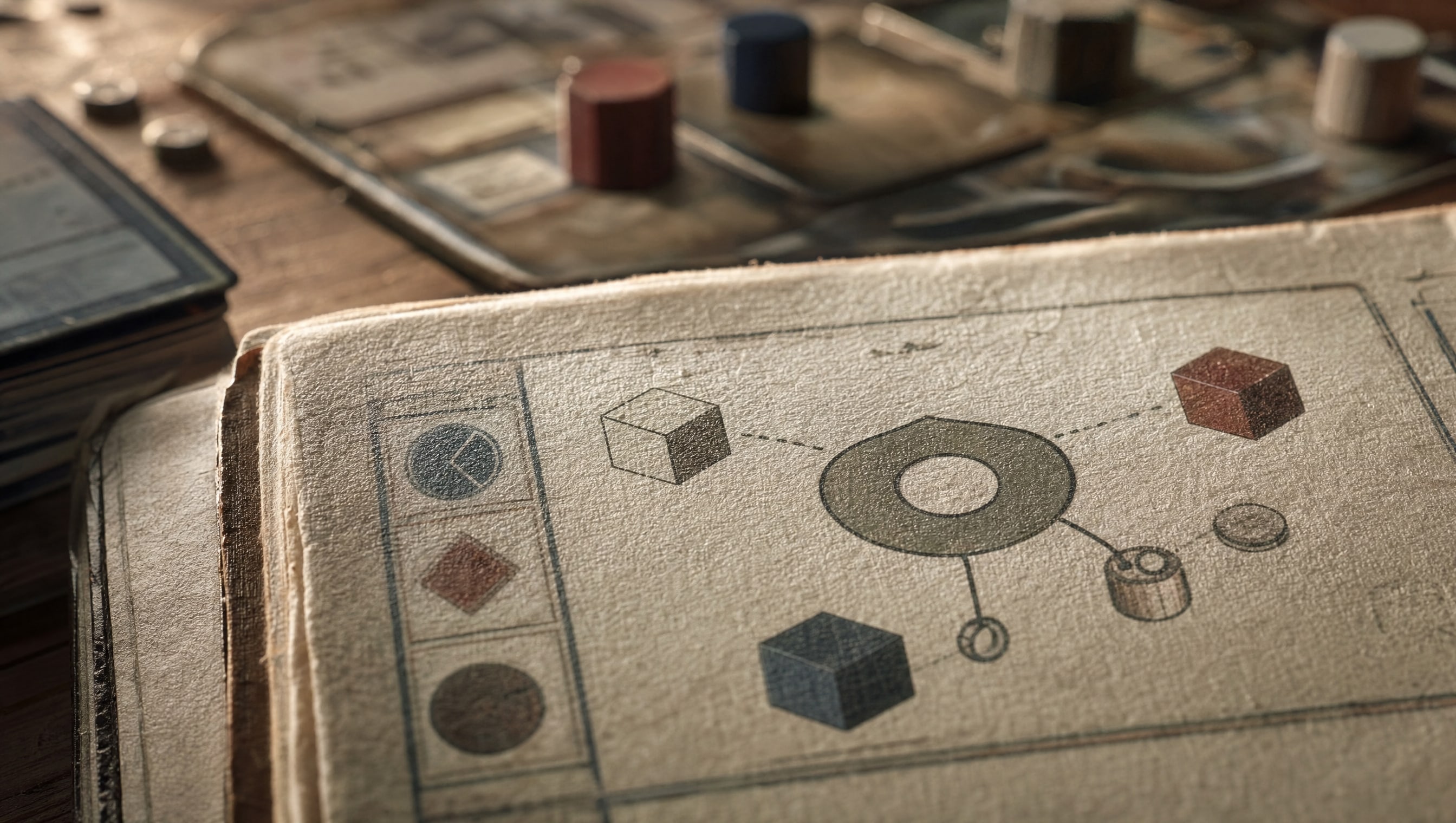
The clock starts when the box hits the table, not when you start talking. Four minutes of setup buy you a four-minute teach — one minute of hook, three minutes of a turn played out loud — and at eight it stops being your game and becomes theirs. The widths below are minutes, to scale; the shading is how much of each minute is your voice.
PRICE: 3 PATHS
Start where your actual problem is. If the box is the obstacle, take the first. If four people are waiting on you with their coats still on, take the second. If nobody has agreed on what to play yet, take the third.
FROM THE CURATOR
I used to read the setup section aloud. All of it. I thought skipping anything was unfair, and I watched four people go quiet in the same order every time — first the one who came for the company, then the one who reads slowly, then the two who were being polite about it. The fix was not a better memory. It was accepting that a rule nobody needs for eleven minutes is a rule you can hand over in eleven minutes.
BY POPPY — CLASS: CURATOR · THEPINKPIPER.GG
5 PIECES · ON THE TABLE
Five pieces queued for Chapter 01. Titles are set and the drafts are moving; nothing is linked here until the page exists, because a door that opens onto nothing costs you a click to find out.
01
The script on the clock above, said out loud, with the exact sentence to open on and the three habits that add four minutes without adding anything else.
BY POPPY · 5 MIN
02
Read the end first, the turn second, the components last. Why the index is the most useful page and the examples are the most dangerous.
BY IRIS · 7 MIN
03
They do not hate board games. They hate one specific memory of a four-hour argument, and there is a box that fixes it.
BY POPPY · 6 MIN
04
Scoring is the part people stop listening to. Give them one number to want and defer the rest until somebody has a reason to ask.
BY IRIS · 4 MIN
05
Twenty minutes in, two players are lost and nobody will say so. The reset that saves the night without restarting the game.
BY POPPY · 5 MIN