01
How to Read a WATA Grade
What the number counts, what the letter beside it counts, and which of the two is actually moving the price.
GUIDE · 1200 WORDS
 How To: Gaming
THE HOW TO CO. — EDITION 10
How To: Gaming
THE HOW TO CO. — EDITION 10
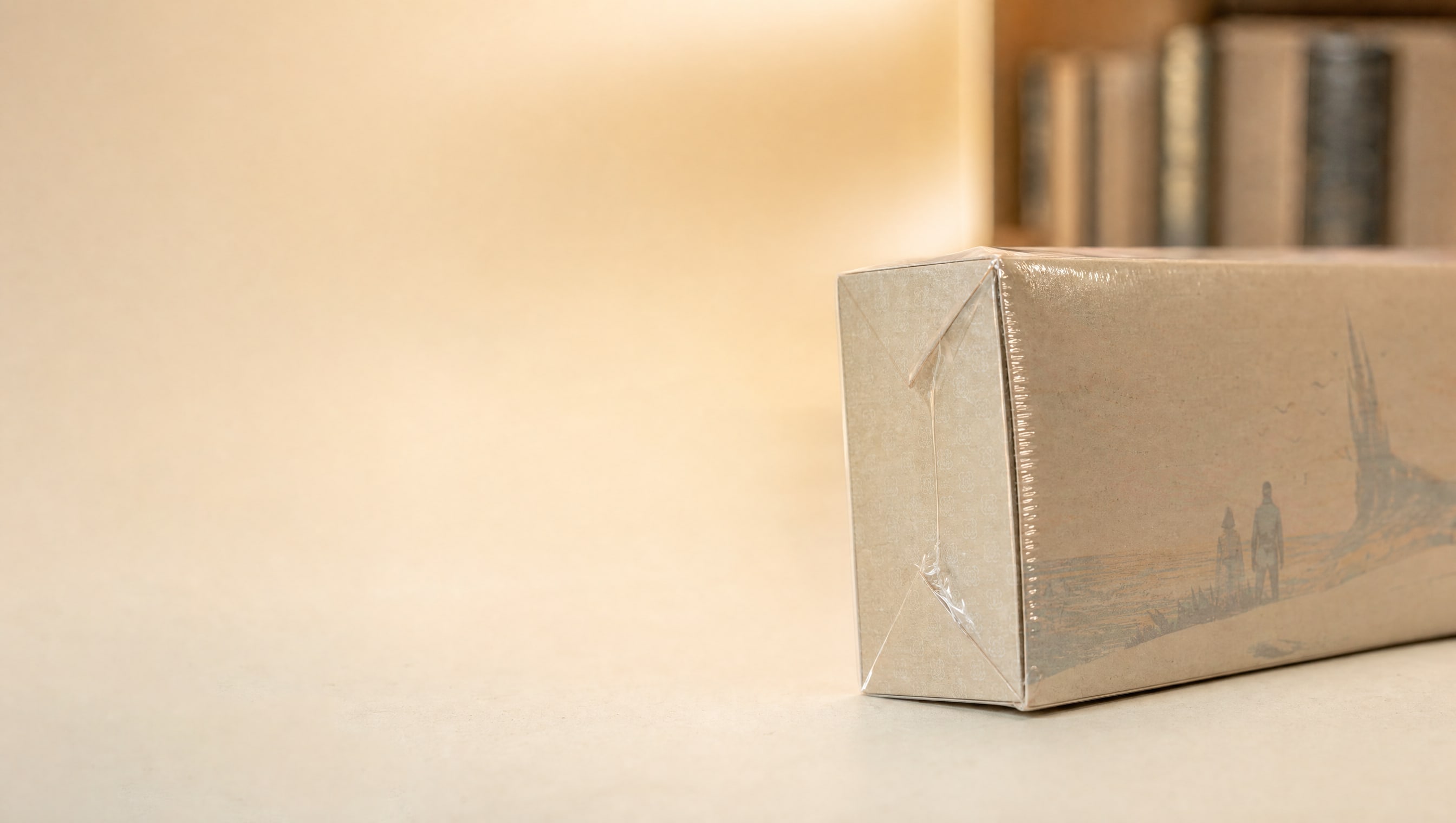
The top of this shelf is not a game. It is a cardboard box under forty-year-old plastic film, scored twice by a stranger and sold on a number — and everything that number counts is on the outside.
CASE 03 · OPENED
Two copies of the same 1991 cartridge, same print run, same warehouse. One is worth forty pounds and one is worth five figures, and the difference between them is a sheet of plastic nobody was ever meant to keep.
A sealed grade never touches the game. It cannot: the moment the film comes off, the thing being priced stops existing. So every point in the number is scored off the outside of the carton — the printed face under the plastic, the eight corners, the twelve edges, and how flat the whole thing has stayed in whatever cupboard it spent forty years in. Whether the cartridge inside still holds a save file is not a question anyone asks, and cannot be answered without ending the conversation.
Which is why there are two marks and not one. WATA prints a numeric grade for the box and a separate letter for the seal — A, A+, A++ — because the carton and the film are two different objects with two different histories, and one can be immaculate while the other is a mess. VGA sets a single number on a 100-point scale with named tiers above it. Two houses, two rubrics, and no honest conversion between them: a 9.4 is not a 90, and anybody offering you a table that says otherwise wrote the table themselves.
Then the population report, which is the number people misread most often. It says how many copies of a title a service has graded, and at what. It only ever goes up. A copy described as one of three at this grade is one of three so far — three that have been submitted, paid for and slabbed, out of an unknown number sitting in lofts. Every fresh submission is a claim against the scarcity you paid for, and the only population that never moves is the one for a title nobody is bothering to grade.
And the price. The figures that reach headlines are single sales, at auction, between two people who both wanted the same box on the same afternoon. An asking price is a wish. A comparable is a sold price with a date attached, and on this shelf a date more than a year old is a historical note rather than a guide. Before you bid on anything sealed, find three sold prices, check that all three are the same grade from the same house, and treat the gap between the lowest and the highest as the real answer.
THE DETAIL
Everything a sealed grade counts lives on the outside. Shaded here are the zones the number is actually made of — eight corners as solid patches, twelve edges as hatched bands — with the four features that belong to the film rather than the box named alongside them: the printed face beneath it, the fold heat-set across the end, the seam where the wrap was closed, and the watermark printed into the plastic itself, running over the corner from the front onto the side. Underneath, the two things a reseal has the most trouble with, drawn side by side.
THE TWO A RESEAL STRUGGLES WITH
The end fold
A machine creases the film the same way every time: the folds meet near the centre of the end panel, they are heat-set flat, and the seam runs where that line always runs. A fold made by hand wanders, sits thick at the corners, and usually leaves the seam lying across a face where no machine would put it.
FACTORY: EVEN AND FLAT · LATER: BUNCHED, SEAM ADRIFT
The watermark
Some factory film carries a faint repeating pattern printed into the plastic, invisible head-on and obvious the moment you tilt the box under a light. It runs continuously over the corners, because it was printed on a roll before anything was wrapped in it. Modern film sold by the metre is plain, and slightly thicker in the hand.
ORIGINAL: A REPEAT THAT CROSSES CORNERS · LATER: NOTHING
HOW A SEALED GRADE IS WRITTEN
A graded sealed box is quoted as a number and a letter, printed together and read as though they were one score. They are not. One of them is about cardboard and one of them is about plastic, and they are counted on scales that share nothing but a listing title.
The number is an opinion about a carton. The letter is an opinion about a wrapper. Only one of them can be replaced in an afternoon.
Face
Print quality under the film: fade from a window, rub from a shelf, and any crease that has travelled through the card.
Corners
All eight, including the two you cannot see in any listing photograph. Corners are where a dropped box tells on itself first.
Edges
Twelve of them. Crush, roll and the long soft dent a box picks up from standing against a heavier one for a decade.
Steps
Coarse at the bottom, very fine at the top. Almost all the money on this shelf lives in the last point and a half.
A
The original wrap is there and doing its job, with wear on it: slack, small tears, a shrunk or split corner.
A+
Tight, clean, largely undamaged. The seam and the fold are where a machine put them and have not been disturbed.
A++
The film as it left the plant: taut, unbroken, watermark unmistakable across the corners.
None
No original film, no letter. A rewrapped box is not a sealed box, and the honest listings say so in the title.
FROM THE CURATOR
The one I overpaid for looked perfect in the photographs, and it was perfect — the seller had simply not mentioned that the wrap was new. I found out by tilting it at my own window a week later and finding nothing in the plastic at all. It cost me about four hundred pounds and it was the most useful four hundred pounds I have spent on this shelf, because now I ask for one photograph before anything else: the box held at an angle to a hard light, corner in shot. Sellers who have nothing to hide send it in ten minutes. The others explain why they cannot.
BY POPPY — CLASS: CURATOR · THEPINKPIPER.GG
5 PIECES · IN THE ARCHIVE
The pieces this case is holding room for, three of them carried over from the day the page opened. Titles are set here before they are written, so the case shows its shape — nothing links yet, because a label pointing at an empty case is worse than a label that says wait.
01
What the number counts, what the letter beside it counts, and which of the two is actually moving the price.
GUIDE · 1200 WORDS
02
Grading fees, insured postage, the months in the queue, and the titles where a sealed copy will never earn any of it back.
EXPLAINER · 1100 WORDS
03
Sold prices rather than asks, three comparables rather than one, and what a complete-in-box copy is really worth over a bare cart.
HOW-TO · 900 WORDS
04
The fold, the seam, the watermark and the weight of the film — the four checks, in the order that settles it fastest.
HOW-TO · 1000 WORDS
05
Why the count only goes up, what a scarce grade is scarce against, and the submission wave that halves it overnight.
GUIDE · 1300 WORDS
SHELF 06 / 07 · RETRO GAMES · CASE 03 / 03
Every chapter in this region is a bay on this wall. This one is 06, and you are at case 03 of 03 on it — Valuing & Sealed Grading. Back to the wall to walk the rest.